In web-based AI chats, a client saying 'thanks' usually means a lingering doubt was properly addressed. Using an overseas property project as a case study, this piece looks at how tweaking AI response flow and pacing can bridge the gap for high-ticket items and professional services.
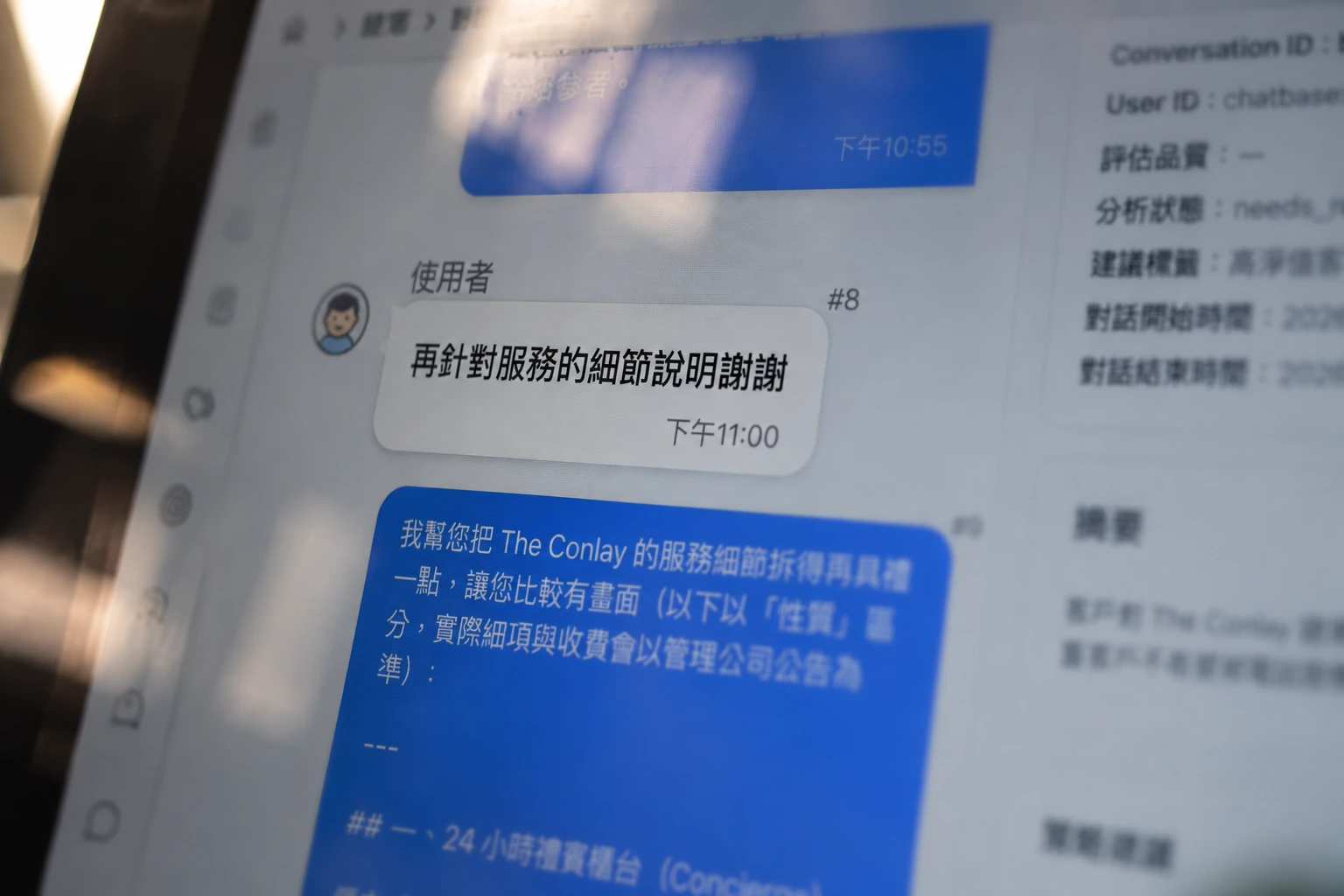
One day, while reviewing our website's AI chat logs, I noticed a client dropping a final message after asking their questions:
"Cheers."
While the team was busy tracking page views, session duration, and lead counts, that moment made us hit pause. Nobody tracks how many times users say thanks to the AI, but it struck me as pretty meaningful.
Someone getting that exact bit of reassurance they were looking for—that's when it clicked. This is from an overseas property project I've been working on recently.
My client is a property group with over 25 years on the ground in Malaysia. Working with them for a while now, what stood out was how meticulous they are about real estate.
They're super sharp about what info can be shared now, what regulations might shift, and what needs to go straight to a lawyer or the on-site team.
Same goes for client relations. Before any deal closes, they'd rather hash out potential worries one by one than rush a sale.
One of their team's mottos has stuck with me: "The deal is just where the service begins."
Later on, as they looked to scale up their presence in Taiwan, I came on board to help fine-tune their website's AI support.
We started by mapping out how the AI responds, structuring the data, drawing the line on what it can and can't say, and spotting where friction was creeping into the user journey.
For someone sitting in Taiwan looking at Malaysian property for the very first time, what's actually holding them back from reaching out?
The Hardest Barrier in Overseas Property: Distance
It's not just the physical miles between Taiwan and KL—it's the underlying anxiety of not being able to check things out yourself.
Sure, you can put up photos of Bangsar, list out the transit lines, room layouts, and neighborhood vibes, or show the view from the balcony. That stuff is easy enough to digest.
Often, though, it's the tiny questions—the ones people might feel awkward firing off to an agent right off the bat—that mark the start of real trust.
- "Can foreigners actually buy here?"
- "Is this developer legit?"
- "Is transferring funds overseas safe?"
- "What if I'm just looking around for now?"

Interacting online isn't the same as sitting down for a cuppa. You've got to position the AI with a bit of human warmth, bringing those underlying questions and experiences front and centre.
The Real Job of AI on a Website Is Data Gathering
Loads of people reckon setting up an AI 'customer service bot' is just feeding in site docs, tweaking the tone, and setting up basic guardrails.
In reality, after helping over 20 different types of clients, I've found the AI's actual role on a website is more like a consultant. Users might just be eyeing a floor plan, checking out local transport links, and then circling back to ask about management fees.
They aren't ready to chat with an agent yet—they're still in discovery mode. If the AI dumps every single piece of site data on them at once, it might technically be correct, but it won't necessarily help.
How Long Does This Actually Take?
I spent a ton of time refining the trigger points where conversations kick off.
People asking about pricing need numbers. Someone asking about MM2H might not even have decided if they're buying yet. And if they're already asking "what time is the webinar?", they don't need to be looped back around to whether they're buying to live in or invest.
Someone asking about investments doesn't mean you should instantly pitch an entire block of units. They might just want to know if Airbnb is allowed, how rental yields stack up, or if they plan to move in down the track.
Others ask about regulations, but what they're really testing is: "Can I trust you?" Every single question points to a different next step. Sometimes, holding back info they don't need yet lets the chat move forward a bit easier.
Looking back at actual chat logs, one thing stood out: Taiwanese clients rarely come right out and ask, "Are you guys gonna scam me?"
Instead, they skirt around it: "Can foreigners buy?" On the surface, it's about eligibility; underneath, it's about peace of mind.
"Are you guys licensed?" Usually translates to: Can I actually trust you? "How do I wire the funds?" Might really mean: Will my money vanish?
Drop a wall of sale-and-purchase agreements, legal clauses, and company reg numbers on them at that point, and sure, the facts are right—but their underlying worry is still there.
So, I started tweaking the sequence of answers and the rhythm of the chat, trying to mirror how humans naturally react when faced with these sorts of hurdles.
Anything needing a human touch gets handed off to a property consultant. The AI doesn't need to pretend it knows everything. It just needs to know when to stop.

Later on, I went back to that single "thanks," sampling over a hundred live chats alongside our site traffic.
Where are people landing? Where do they start chatting? What keeps the convo going versus what makes them bounce? What kind of reply gets them to ask one more question?
From there, the optimization got tactical: what specific piece of info does this person need right now to stay engaged for the next stage?
Post-project, our division of labor is crystal clear. The client handles properties, clients, and deal rooms. I look after the site, search content, digital pathways, and AI dialogue, gradually clearing out the roadblocks Taiwanese buyers face when dealing with an overseas brand.
I've Condensed the Process Into Four Questions
These work just as well for high-ticket items, professional services, or anything requiring a bit of consideration from the buyer.
- 01
01|What have they already looked up before arriving?
Don't assume everyone starts from scratch.
Some have compared specs, others checked pricing, and a few might have already scoped out competitors.
Figure out what's on their mind when they hit the site so the AI doesn't regurgitate stuff they already know. - 02
02|How much do they actually need to see right now?
AI loves oversharing because it knows so much.
But throwing ten different angles at them isn't as useful as striking out seven.
If someone just wants to know about the commute, sort the commute first. If they're checking out Airbnb potential, skip pitching every single floor plan.
It's not about giving the most complete answer—it's about making the next step easier. - 03
03|What are they really trying to verify with that question?
"Can I buy?" might not just be about red tape.
"Is your company certified?" might be more than just wanting a registration number.
Plenty of crucial concerns won't be spelled out directly.
That's why when I check AI chats now, I look past:
Question → Answer
Instead, I run a simple formula: What did they ask? → What are they actually checking? → How much to share right now? → Where to direct them next? - 04
04|What should the very next line be after this answer?
Not every AI chat needs to end with a hard "Please drop your contact details."
Price seekers might need numbers right away.
People asking about event schedules are probably ready for a real person to take over.
Where did they come from → Where are they stuck → How much do they need to know right now → How far are they ready to go next.
Getting the AI to answer questions isn't the tricky part anymore. The real design challenge is making sure it delivers the right depth at the right time, while knowing when to hand over the reins to a human.
At the end of the day, that simple 'thanks' doesn't mean everything is solved. But it does mean someone who felt miles away and full of doubts got the exact answer they needed right then and there.
Distance isn't just about kilometers. Sometimes, it's just a customer left with a question that hasn't been properly answered yet.