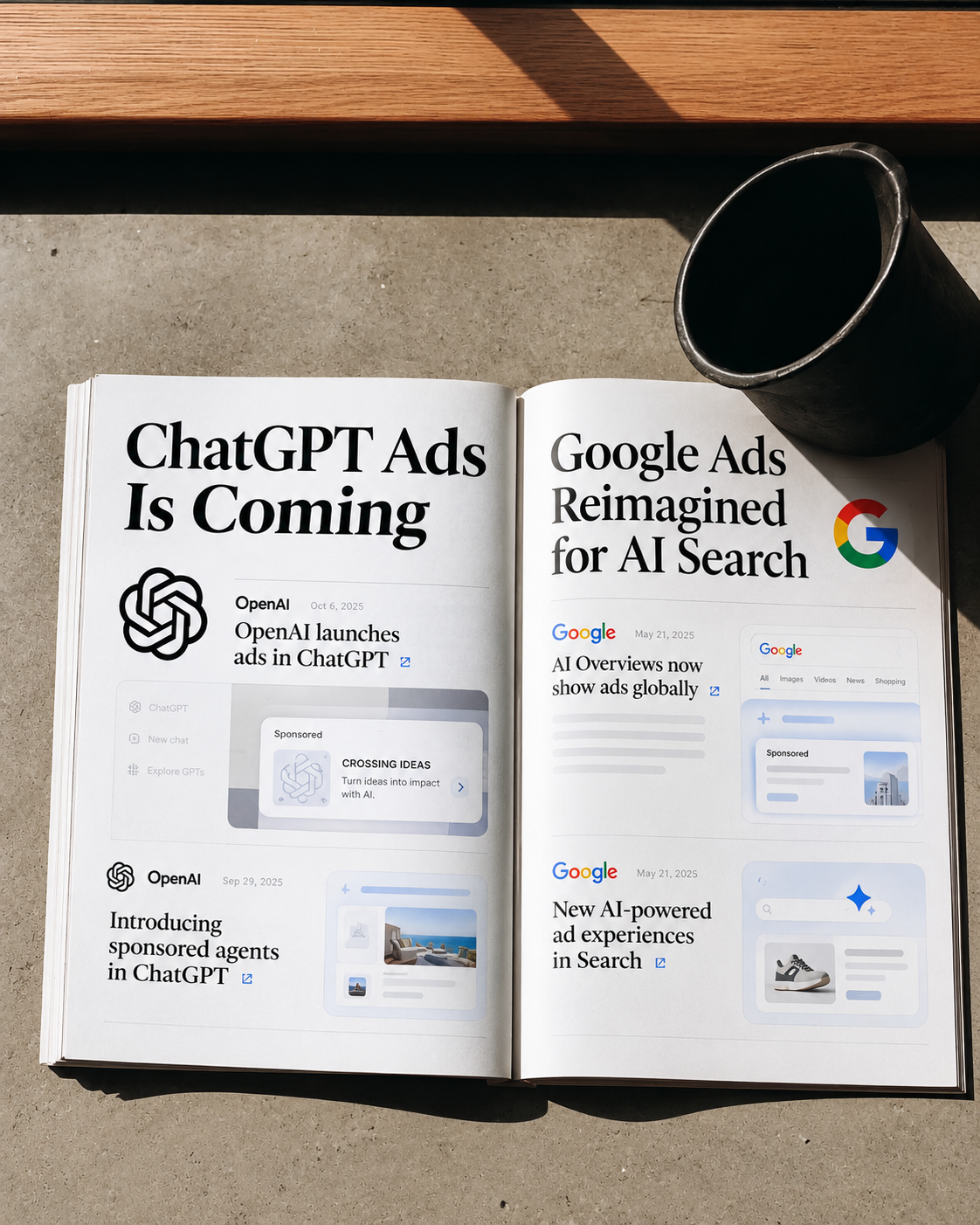
With the rise of ChatGPT Ads, website agents have become the go-to tool for capturing visitor intent. When prospects land on your site with pre-researched, specific questions, your agent needs to identify traffic sources, gauge understanding, drop the right call-to-action at the right time, and feed interaction data back into the loop to seal the deal.
Ever since ChatGPT Ads rolled out, one thought’s been on my mind:
If a customer has already narrowed down their options inside ChatGPT before clicking through to your site, they're arriving with context and have likely already binned a few competitors.
Once they land, they’re probably not going to start from the homepage or slog through your entire brand pitch. They'll likely dive straight in with:
- "Are your offshore education packages suitable for Year 12 grads?"
- "How do your migration consultant fees work?"
- "If I want to hit up an info session first, how do I lock in a spot?"
At this point, your site isn't dealing with a cold lead; you've got someone on the hook who's actively comparing options and has already formed a preliminary view. That’s why I reckon ChatGPT Ads make having a slick website agent non-negotiable.
Ads only get you to the consideration table. Once they click through, users still need a hand understanding your service, ticking off requirements, and taking the next step.
Take a recent overseas education and migration advisory case we looked at—it nails this exact point.

We noticed the chat data peaked between 6:00 PM and 11:00 PM, with folks asking about visas, fees, financial thresholds, schools, and info sessions. On the surface, it’s just standard FAQ territory. However, when you cross-reference chat timestamps, pages viewed, pre-chat browsing history, and final conversions, you finally spot where prospects are dropping off.
Did they bounce over from an ad?
Did they check out pricing or case studies first?
Did they keep reading after dropping their first question?
Did the site dish up enough info to help them make a call?
Did they end up booking, filling out a form, or asking to speak with a human?
These are the exact data points your website agent needs to wrangle. Our analysis also showed that visitors were way more keen to book an info session than keep reading endless service brochures. That insight changes how you design the agent.
When someone first lands, you sort out the basics; when they start grilling you on fees and family setups, you pivot to service comparisons; once they sniff around info sessions, you push the booking front and centre to clear the path.
In that same case study, tweaking the opening line generated a nearly 9x jump in lead gen. Proof that an agent's job doesn't stop at spitting out answers—it's about constantly testing which openers, info sequences, and nudges keep people moving down the funnel.
What core capabilities does a website agent need?

Moving forward, a solid website agent needs to nail these five things:
- Track where the user came from
- Know what they were looking at before they landed
- Gauge their understanding based on the chat flow
- Serve up the right call-to-action at the sweet spot
- Feed bookings, form fills, and conversion metrics back into your pipeline
There’s a world of difference between this and just slapping a generic chat widget on your homepage.
ChatGPT Ads bring your brand closer to the decision-making gate, while your website agent handles the heavy lifting of comprehension and conversion once they're through. Down the track, if agents start doing the heavy lifting of searching, comparing, and even kicking off processes on behalf of users, brands won't just need pretty copy—they’ll need a joined-up, trackable, and agile service ecosystem.
Analysing how people land, what they ask, and where they convert isn't about chasing the latest tech buzzword. It’s about getting your data sorted for the next acquisition channel.